HiPP Goat Milk Formula Explained: German vs Dutch Comparison

Goat milk formula has become an increasingly popular choice among parents looking for a gentle alternative to traditional cow's milk formula. Among the many options available, HiPP Goat Milk Formula stands out for its certified organic ingredients, thoughtfully designed recipes, and adherence to some of Europe's strictest quality standards.
If you've been researching HiPP Goat Formula, you've probably noticed there are both German and Dutch versions available. At first glance, they appear quite different: different packaging, different labels, and slightly different stage names, but many parents are surprised to learn that the two formulas are actually far more alike than they are different.
In fact, both versions are made with organic goat's milk, naturally contain A2 milk proteins, use lactose as their only carbohydrate source, and provide complete nutrition for healthy infants. The biggest differences come down to packaging, labelling, and the way the stages are organized, rather than changes in the composition of HiPP Goat milk formula ingredients.
In this guide, we'll explain what makes HiPP Goat Formula unique, compare the German and Dutch versions side by side, and help you decide which one best suits your family.
Table of Contents
Understanding HiPP Organic Goat Milk Formula

Before comparing the German and Dutch versions, it's helpful to understand why many parents choose goat milk formula for babies in the first place.
HiPP Organic Goat Formula is designed to provide complete nutrition for healthy babies from birth while using carefully selected organic ingredients. Like all infant formulas sold in the European Union, HiPP formulas must meet strict regulations governing protein, carbohydrates, fats, vitamins, minerals, and essential fatty acids to support healthy growth and development.
One of the main reasons parents are drawn to goat milk formula is its naturally occurring protein profile. Goat milk contains predominantly A2 beta-casein, a type of milk protein that is also naturally found in human breast milk. Traditional cow's milk often contains a mixture of A1 and A2 beta-casein.
During digestion, A1 beta-casein can release a peptide called beta-casomorphin-7 (BCM-7), which some researchers have investigated for its possible connection to digestive discomfort. Since A2 beta-casein does not produce BCM-7 during digestion, some babies may find goat milk formulas easier to tolerate.
However, goat milk formula is not suitable for every baby. Although it may be gentler for some infants, goat milk proteins are still very similar to cow's milk proteins, meaning it is not recommended for babies with diagnosed cow's milk protein allergy (CMPA). It is also not suitable for babies with lactose intolerance, as lactose remains the primary carbohydrate in HiPP Formula goat milk.
Overview of HiPP German Goat Milk Formula
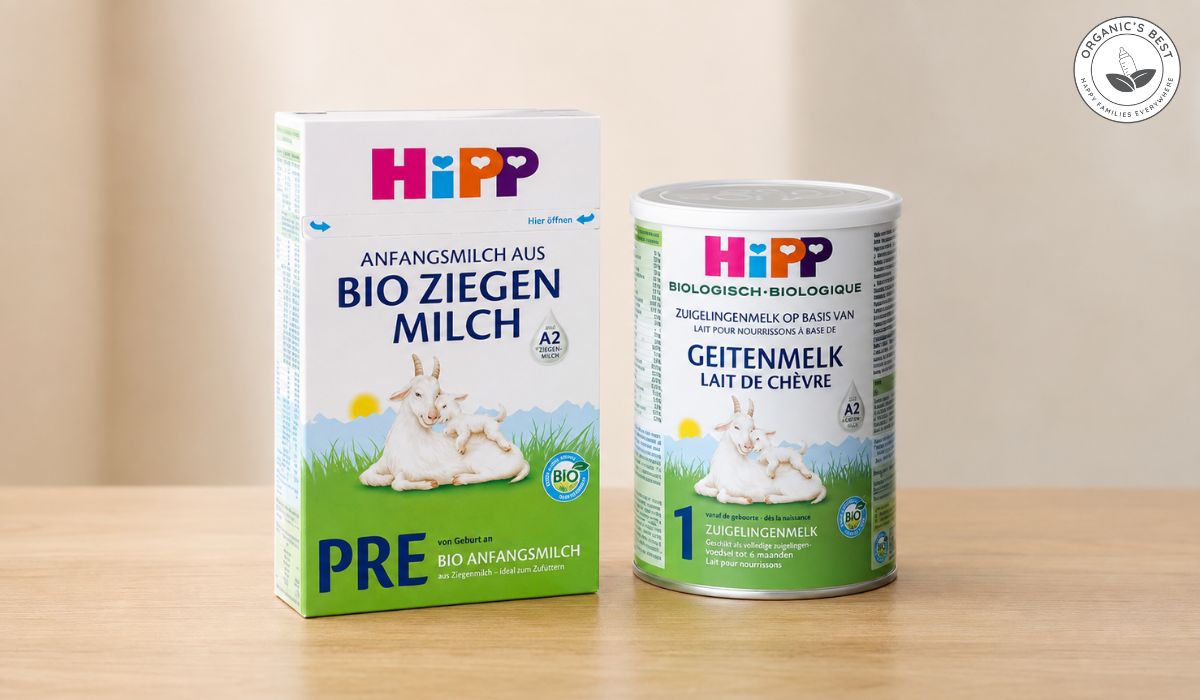
HiPP German Goat Formula is produced in Germany and follows HiPP's traditional German formula standards. It is available in two stages:
-
HiPP Goat Milk Formula Stage PRE for babies from birth to 6 months
-
HiPP Goat Milk Formula Stage 2 for babies from 6 months onward.
The German version comes in a 400 g cardboard box with labelling written entirely in German.
Overview of HiPP Dutch Goat Milk Formula
HiPP Dutch Goat Organic Baby Formula is produced in Germany for the Dutch market and offers the same recipe as the German version. It is available in two stages; however, they are labelled differently from the German version.
-
HiPP Dutch Goat Formula Stage 1 for babies from birth to 6 months
-
HiPP Dutch Goat Formula Stage 2 for babies from 6 months onward.
Dutch Stage 1 serves the same purpose as German Stage PRE, providing complete infant nutrition from birth. Despite the different naming system, the formulas have the same composition and are designed for the same developmental stage.
The most notable difference is that the Dutch version comes in a 400 g metal tin with packaging written in Dutch and French.
HiPP German Goat vs. HiPP Dutch Goat Formula: The Ultimate Comparison
Next, we take a closer look at each formula, comparing the ingredients, nutritional composition, taste and texture, packaging, preparation, safety and quality standards, and stage lineup between HiPP German vs. HiPP Dutch goat formula.
Ingredients
When comparing the ingredient lists of HiPP German Goat and HiPP Dutch Goat, parents may expect to find major differences. However, the two formulas are based on the same formulation.
Both products begin with organic goat's milk and goat milk powder and use lactose as the only carbohydrate source. They also contain organic vegetable oils, including palm oil, rapeseed oil, and sunflower oil, along with DHA-containing fish oil and ARA from Mortierella alpina oil.
Both formulas include GOS prebiotics, which help nourish beneficial bacteria in the digestive tract, as well as essential amino acids such as L-tyrosine, L-tryptophan, and L-cystine. They are also fortified with the same key vitamins and minerals required for infant nutrition, including iron, calcium, vitamin D, vitamin C, zinc, iodine, and B vitamins.
Some differences you may notice are simply related to labelling conventions. For example, the German formula lists niacin, while the Dutch formula lists niacinamide. Similarly, Dutch packaging may list calcium-D-pantothenate instead of pantothenic acid. These are not meaningful formula differences; they are simply different ways of naming the same nutrients.
Overall, the ingredient profiles of HiPP German Goat and HiPP Dutch Goat are virtually identical.
Nutritional Composition
From a nutritional perspective, HiPP German Goat and HiPP Dutch Goat are extremely comparable.
Both formulas meet the strict nutritional requirements established by European Union regulations for infant and follow-on formulas. They provide a balanced combination of protein, carbohydrates, fats, vitamins, and minerals needed to support healthy growth.
The formulas contain naturally occurring goat milk proteins, including predominantly A2 beta-casein, which some parents choose because of its similarity to the protein profile found in human milk.
Both options also provide essential fatty acids such as DHA and ARA to support normal brain and visual development. These nutrients are especially important during infancy because the brain and nervous system experience rapid growth during the first years of life.
Neither formula is nutritionally "better" than the other. The differences are primarily related to format and availability rather than the nutritional value provided.
Taste and Texture
Because the formulas have the same ingredient profile, the taste and texture are also the same.
Goat milk naturally has a slightly different flavor compared with cow's milk formulas. Many parents describe goat milk formula as having a mild, creamy taste.
Both HiPP Goat formulas dissolve smoothly when prepared correctly and create a similar consistency. Since the recipes are so closely matched, most babies who tolerate one version will transition to the other without noticing a significant difference.
Packaging
Packaging is the most noticeable difference between HiPP German Goat and HiPP Dutch Goat.
The German version comes in a 400 g cardboard box, while the Dutch version comes in a 400 g metal can.
The German box is a lightweight container that holds a satchet of formula powder inside. Scooping from this bag can be a little messy at times, especially as you use up the formula and have to scoop from deeper down.
The Dutch can offers a more durable container, which is great for transporting the formula, and the powder is directly in the can below a protective foil seal. Once opened, it's easier to access the powder and comes with a nifty metal levelling edge for added convenience. It also offers a resealable lid, which some parents prefer over the closure of HiPP's formula boxes.
The labels also differ. German packaging is written in German, while Dutch packaging includes Dutch and French labelling.
Preparation Instructions
Both formulas follow similar preparation methods.
Parents should always prepare formula according to the instructions printed on their specific package. This typically involves using freshly boiled water that has been cooled to the recommended temperature before mixing with the formula powder.
Using the correct powder-to-water ratio is important because adding too much or too little powder can change the nutritional concentration of the bottle. It's also key to only use the scoop given with your baby's formula.
Although the formulas are very similar, measuring instructions, scoop sizes, and preparation details should always be followed according to the exact product being used.
Safety and Quality Standards
Both HiPP German Goat and HiPP Dutch Goat follow strict European safety and quality standards.
HiPP sources organic milk from carefully selected farms and performs extensive testing throughout production. Each batch is checked for microbiological safety, contaminants, pesticide residues, and nutritional accuracy before being released.
The European Union has some of the world's strictest regulations for infant formula, requiring manufacturers to meet detailed standards for ingredient safety and nutritional composition.
They're also both EU-certified organic and hold the HiPP Organic Seal. Regardless of which country version you choose, both formulas represent HiPP's commitment to high-quality organic infant nutrition.
Stage Lineups
The biggest practical difference between the German and Dutch versions is how the stages are named.
German Version
-
HiPP German Goat Formula Stage PRE 400g: Suitable from birth to 6 months
-
HiPP German Goat Formula Stage 2 400g: Suitable from 6 months onward
Dutch Version
-
HiPP Dutch Goat Stage 1 : Suitable from birth to 6 months
-
HiPP Dutch Goat Stage 2: Suitable from 6 months onward
German Stage PRE and Dutch Stage 1 infant formulas serve the same purpose: providing complete nutrition for babies from birth. For babies starting solids around 6 months, both versions offer a Stage 2 follow-on formula designed to complement a mixed diet.
Price and Availability
In terms of price, the Dutch version is slightly more expensive because the metal containers cost more to produce than the cardboard boxes of the German version. The can also comes with the advantage of added durability and greater ease of use during formula preparation.
Here at Organic's Best, we work directly with HiPP to ensure we source an authentic and reliable supply of HiPP Goat so you can have access to this premium formula consistently. We also offer insured express delivery in only 2-7 business days to the USA and Canada and free shipping on orders of $190 and up.
The Final Verdict: Which HiPP Goat Formula Should You Choose?
When comparing HiPP German Goat and HiPP Dutch Goat Formula, there is no clear nutritional winner. Both formulas offer the same foundation of organic goat milk, A2 proteins, lactose-based carbohydrates, GOS prebiotics, DHA, ARA, vitamins, and minerals to help your little one thrive.
The better choice depends on your personal preferences, budget, and which packaging or stage system works best for your family.

Choose HiPP Goat German If...
-
You prefer the traditional German PRE stage from birth.
-
You like the compact and lightweight 400 g cardboard box format.
-
You specifically want the German product line.
-
You prefer the more budget-friendly variety of this goat formula.
Choose HiPP Goat Dutch If...
-
You prefer the added convenience of a resealable metal can.
-
You like the Stage 1 and Stage 2 naming system.
-
You're French-Canadian and appreciate packaging labelled in French.
-
You don't mind spending a bit more for greater packaging durability and less-messy preparation.
FAQs About HiPP Goats Milk Formula: Dutch vs German
Here are the most asked questions about HiPP Goat Milk formula.
What is the Main Difference Between HiPP German and HiPP Dutch Goat Milk Formula?
The main differences are the packaging, labelling, and stage names. HiPP German Goat comes in a 400 g cardboard box and uses Stage PRE and Stage 2, while HiPP Dutch Goat comes in a 400 g metal can and uses Stage 1 and Stage 2. The actual ingredient lists and age suitability across stages are the same.
Is HiPP German Goat Formula Better Than Dutch?
No. Neither version is considered better. Both formulas meet strict European infant nutrition standards and provide virtually the same nutritional benefits. The best choice depends on your family's preferences.
Can I Switch From HiPP German Goat to HiPP Dutch Goat?
Yes. Since the two formulas are so similar, many babies can transition between them without issues. When switching formulas, some parents prefer to gradually introduce the new formula over several days to allow their baby's digestive system time to adjust.
Where to Buy HiPP Goat Milk Formula
You can purchase both German and Dutch versions of HiPP Goat here at Organic's Best Shop. We offer insured express shipping, bulk-order discounts, and flexible subscription options.
You may also want to check: Is Goat Milk Formula Safe?
|
Disclaimer: Please be aware that this information is based on general trends in babies, and it is not medical advice. Your doctor should be your first source of information and advice when considering any changes to your child’s formula and when choosing your child’s formula. Always consult your pediatrician before making any decisions about your child’s diet or if you notice any changes in your child. Breastfeeding is the best nutrition for your baby because breast milk provides your child with all the essential nutrients they need for growth and development. Please consult your pediatrician if your child requires supplemental feeding. |

Leave a comment
Comments will be approved before showing up.
Also in Organic Infant Nutrition and Health Blog