

Can You Bring Baby Food Pouches on a Plane? Essential Tips for Parents
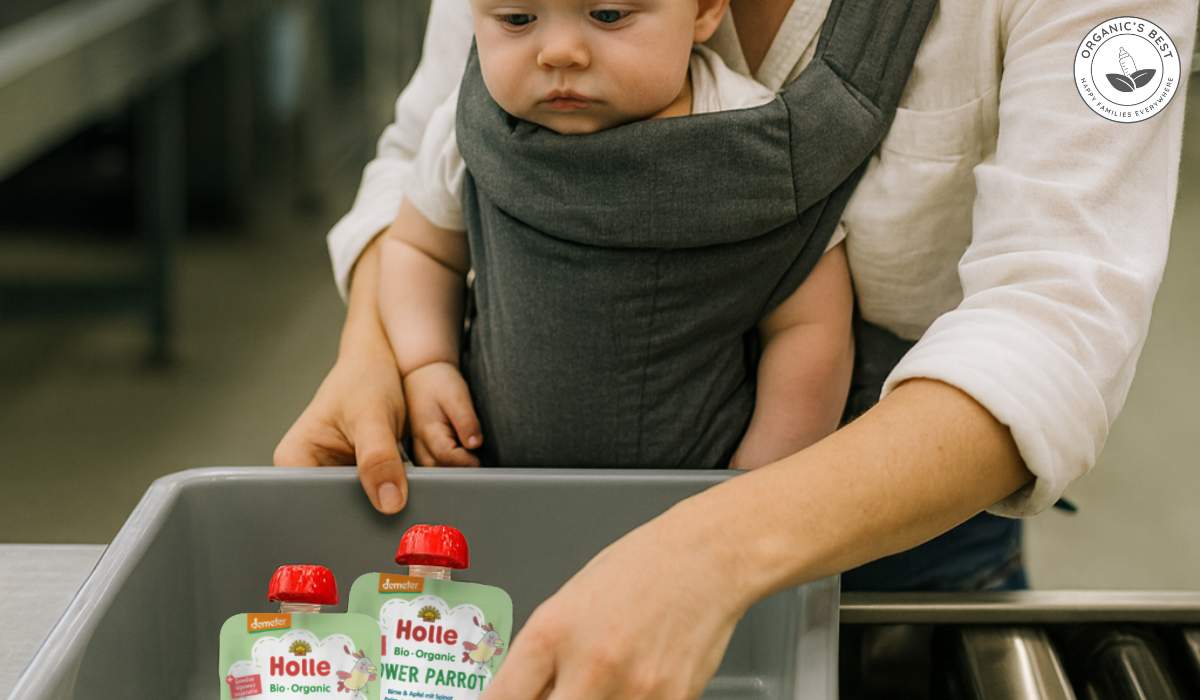

If you've ever sprinted through an airport with a baby on one hip and a bag in the other, you already know traveling with a little one comes with its own challenges. There's the juggling luggage, the unpredictable schedule changes, the wondering if you've packed enough as you hurry out the door, but one thing you don't have to overthink is bringing baby food.
Aviation security authorities in the U.S. and abroad make clear exceptions for baby food, baby formula, and breast milk, so you can keep your baby fed without the added stress. So, if you're wondering, can you take baby food pouches on a plane? The answer is yes!
Still, every region handles these rules a little differently, and knowing exactly what to expect can make your airport experience dramatically smoother.
Below, we break down the guidelines for travelling with food pouches, practical packing tips, and how to keep pouches fresh from takeoff to landing. Consider this your go-to guide for flying confidently with your little one's meals!
Table of Contents
First Up: Are You Allowed to Take Baby Food Pouches on a Plane?
One of the most common concerns that parents have when travelling with little ones, is how to keep them fed, because as many parents know, a full tummy usually means a calm, content kid, something every parent wants on a travel day.

In most countries, baby food pouches, including purees, yogurt pouches, and ready-to-serve meals, are allowed in your carry-on bag. Unlike regular liquids, which must follow the standard 100 mL/3.4-oz rule, baby food is treated as a medically necessary liquid. That means you're allowed to bring more than the normal limit.
But, because we're dealing with airports and security lines, there are still a few steps, screenings, and declarations to keep in mind. Let's break it down by region.
Baby Pouches Regulations by TSA (USA)
If you're flying within or out of the U.S., the Transportation Security Administration (TSA) is surprisingly accommodating when it comes to baby food, formula, and anything your little one needs to stay fed and calm. Unlike regular liquids, baby food pouches don't have to follow the 3.4-ounce (100 mL) rule, and neither do formula, breast milk, toddler drinks, or water for mixing formula. All of these are considered medically necessary liquids, which gives you more flexibility when packing.
You're allowed to bring larger-than-3.4-oz pouches, multiple servings, backups for delays, and cooling accessories like ice packs, freezer packs, and gel packs, even if your child is not present at the checkpoint.
Here's what you need to know to get through security smoothly:

Declare it upfront: At the start of screening, tell the TSA officer that you're carrying baby food, breast milk, formula, or toddler drinks. Remove these items from your bag so they can be screened separately.
Expect additional screening: TSA may test these liquids for explosives or prohibited items. They'll never place anything into the liquid, but they may ask you to open pouches or containers if feasible, especially if they're in opaque packaging. Clear or translucent containers are easiest for screening.
X-rays are safe, but you can opt out: TSA X-ray machines won't harm food or medicine. However, if you don't want your baby items X-rayed or opened, let the officer know. You'll just go through extra screening steps to clear them.
Cooling items are allowed: Ice packs, freezer packs, frozen gel packs, and liquid-filled teethers can all come through. If they're partially melted or slushy, they may need extra screening.
Overall, TSA uses a reasonable quantity rule, meaning you can bring what you reasonably need for the flight, any delays, and the needs of multiple children. It's intentionally flexible to make traveling with little ones a bit less stressful.
Baby Pouches Rules for EU & International Flights
When it comes to luggage restrictions in the EU, these same rules do apply, with rules stating that formula and baby food pouches can exceed 100 mL, and that the reasonable quantity rule applies here as well.
These items must be presented separately during screening, and security staff may need to inspect them.
International airports outside the EU generally follow similar rules with slight procedural differences, but the overall principle stays consistent, which is that baby food is allowed in quantities that make sense for your trip.
Traveling with Baby Food Pouches and Formula
As you now know, traveling with formula and baby food pouches is not only allowed, it's strongly supported by airport security agencies because they recognize these items as essential for infant care.
That means parents can fly with baby food, formula, breast milk, and even water for mixing formula in quantities that far exceed the usual liquid restrictions.
Most parents carry a combination of baby food, like HiPP jars or Holle pouches, ready-to-feed formula, powdered formula, sterilized water, and bottles, and this is all perfectly acceptable as long as you declare it at security.
When you reach the checkpoint, you'll need to place all baby food and liquids in a separate bin and let the officer know you're traveling with them.
From there, expect a quick inspection, sometimes a swab for explosive residue, sometimes a simple X-ray, and then everything is returned to you unopened.
Because organization can make or break the airport experience, many families pack these items in a small, dedicated feeding bag within their carry-on.
This keeps everything in one place and makes the screening process faster, especially if you're juggling a stroller, diaper bag, and a baby amongst all of your other luggage. It's also smart to bring a lightweight bottle brush, a tiny bottle of dish soap, and sanitizing wipes, especially for longer itineraries where you may need to clean bottles or feeding utensils on the go.
While some airlines can refrigerate formula or warm bottles, many cannot, so checking their policies ahead of time can help you plan whether you need cooler bags or insulated sleeves. And although jars and containers are perfectly acceptable, baby food pouches are one of the easiest meal options for travel, because they are lightweight, compact, shelf-stable, and incredibly convenient during turbulence or in tight quarters.
How to Keep Baby Pouch Fresh During Travel
Whether you're flying across the country or hopping on a short domestic flight, keeping baby food fresh comes down to temperature control and smart packing.
A small insulated cooler bag with freezer packs is a game-changer, keeping pouches, yogurt, and other foods cool for several hours. This is especially helpful if your little one prefers chilled items.
Many parents now choose organic baby food, whether prepackaged or homemade. When travelling with homemade purees or packing leftover organic baby pouches, use airtight containers to preserve freshness. Always remember, once food has been in your baby's mouth, it's safest to discard any leftovers, since bacteria can transfer and grow. If feeding directly from a jar, leftovers should also be thrown out after each meal.
Packing baby food in its own compartment or bag helps prevent cross-contamination and makes it easier to access during security checks.
On long-haul flights or busy travel days, an insulated bag can help:
-
Keep items cool
-
Reduce bacterial growth
-
Prevent flavor or texture changes
-
Maintain yogurt and purees at safe temperatures
Even without freezer packs, an insulated bag helps maintain a more stable temperature, giving you peace of mind that your baby's food stays safe and tasty.
Tips for Packing Baby Food for Air Travel
When flying with baby food, you're going to want to minimize mess, keep food safe, and make everything easy to grab when you need it. Here are some tips for flying with baby food pouches.

-
Minimize leaks: Place each pouch or container in a small, zip-top bag, since altitude and pressure changes can make packaging unpredictable.
-
Keep food cool: Use reusable freezer packs for purees, yogurts, and opened containers.
-
Label items: Quick labels make it easier to grab the right food with one hand while holding your baby.
-
Easy access: Pack baby food near the top of your carry-on or in an easily accessible pocket for smooth security screening and in-flight use.
-
Dedicated feeding bag: Keep food items in a small, separate bag inside your carry-on.
FAQs on Flying with Baby Food Pouches
Now that we've answered the burning question, can you bring baby food pouches on a plane, let's get into some of the other frequently asked questions surrounding this topic.
Do Baby Food Pouches Need to Go in the 1-Liter Liquid Bag?
No, because baby food is considered medically necessary for infants, it does not need to fit inside the standard liquids bag. You can carry it separately.
Will Baby Food Pouches Be X-Rayed?
Most likely, yes. X-ray screening is standard. If you prefer that the food not be X-rayed, you can request an alternative inspection, but it may take longer.
Can You Bring Baby Food in Your Carry-On and Checked Luggage?
Yes, you can bring baby food in both your carry-on and your checked luggage. Most parents keep the food they'll need for the flight in their carry-on and pack any extras or long-term supplies in checked bags. Just keep in mind that checked luggage can experience temperature changes, which may affect the texture or quality of homemade purees.
How Many Baby Food Pouches Can I Bring on a Plane?
There's no official limit. You're allowed to bring a reasonable quantity for your baby's needs, which generally means enough for the trip plus extra for unexpected delays.
|
Disclaimer: Please be aware that this information is based on general trends in babies, and it is not medical advice. Your doctor should be your first source of information and advice when considering any changes to your child’s formula and when choosing your child’s formula. Always consult your pediatrician before making any decisions about your child’s diet or if you notice any changes in your child. Breastfeeding is the best nutrition for your baby because breast milk provides your child with all the essential nutrients they need for growth and development. Please consult your pediatrician if your child requires supplemental feeding. |

Leave a comment
Comments will be approved before showing up.
Also in Organic Infant Nutrition and Health Blog



Reviewed by Dr. Bardha Citaku, MD
-

Dr. Bardha Citaku: Medical Reviewer of Organic's Best Blog
Dr. Bardha Citaku completed her medical studies at the University of Prishtina in Kosovo, where she began her journey into the field of medicine. She has since developed a career in medical research, contributing to projects with notable organizations, including the World Health Organization (WHO).
