Holle Ready to Feed Formula Explained

Feeding your baby is one of the most important and one of the most time-consuming parts of early parenthood. Between sterilizing bottles, measuring powder, and preparing feeds at all hours of the day and night, your little one's feeding routine can feel never-ending. Ready-to-feed formulas aren’t a solution for all of your baby feeding woes, but they can make a significant difference and give parents some much-needed time back.
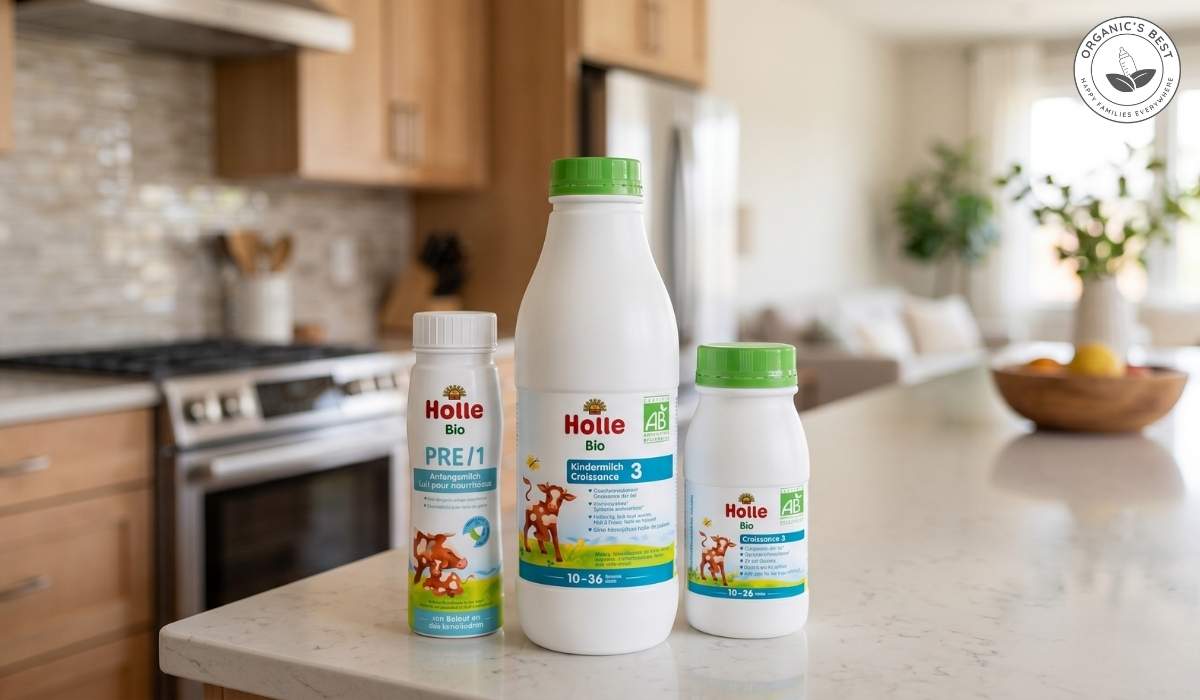
Several ready-to-feed (RTF) formulas are available today, including a new cow's milk line from Holle. It delivers the brand’s trusted organic quality in a convenient format, making feeding easier on busy days, during travel, and late at night.
In this guide, we’ll break down everything you need to know about Holle Organic Ready-to-Feed formula, from ingredients and stages to how it compares with powdered formula, so you can decide if it’s the right fit for your family.
Table of Contents
- What is Holle Ready-to-Feed formula? Introducing Holle’s New Liquid Baby Formula
- What Makes Holle Ready-to-Drink Different?
- Inside the Tin: Key Ingredients in Holle RTF Formula
- Overview of Holle RTF Stages and Product Range
- Holle Ready to Feed vs Powder Formula: What’s the Difference?
- Who is Holle Ready Made Formula Best For?
- FAQs on Holle Liquid Formula
What is Holle Ready-to-Feed Formula? Introducing Holle’s New Liquid Baby Formula

Holle Ready-to-feed is a pre-mixed liquid baby formula that comes in convenient bottles, eliminating the need for tedious preparation. Unlike powdered formula, which requires mixing with water, RTF can be poured directly into a bottle and served instantly, or quickly warmed.
This product line is based on organic cow’s milk and meets strict European Union organic standards. It is designed to provide complete and balanced nutrition while simplifying feeding routines for parents.
Whether you’re at home, traveling, or handling a middle-of-the-night wake-up, Holle’s liquid formula allows you to feed your baby quickly and safely without the extra steps.
What Makes Holle Ready-to-Drink Different?
Holle’s ready-to-drink (RTF) formula stands out because it delivers both uncompromising quality and exceptional convenience, which are two factors that matter deeply during those early stages of feeding your baby.
First, the formula maintains Holle’s well-known organic standards. The milk is sourced from cows raised without synthetic hormones or routine antibiotics, and the recipes are free from GMOs and artificial additives. This commitment to clean, high-quality ingredients ensures that even in a ready-to-feed format, nothing is sacrificed in terms of nutritional integrity.
Another advantage is how the formula is produced. Unlike powdered formula, which is not sterile and must be carefully prepared with boiled and cooled water, Holle’s ready-to-feed formula is manufactured under sterile conditions. It also removes the stress of ensuring water is at the correct temperature and properly mixed, which are steps that can add to the mental and physical load of feeding a little one.
When it comes to nutrition, Holle’s ready-to-feed options are unique within the brand’s lineup. These are the only cow’s milk-based formulas from Holle that include milk fats in the recipe rather than relying exclusively on vegetable oils. Milk fats provide a natural fatty acid profile that more closely resembles breast milk, while also allowing the formula to remain free of palm oil as a valuable source of palmitic acid. This can be appealing for those seeking a less processed option that stays closer to nature.
The ready-to-feed format does come with practical considerations. It has a shorter shelf life, requires more storage space than powdered formula, and tends to be more expensive due to the additional processing and packaging involved.
That being said, many parents find that the added convenience, reliability, and peace of mind more than make up for these trade-offs, especially during busy or sleep-deprived stages of parenthood!
Inside the Tin: Key Ingredients in Holle RTF Formula
Holle’s liquid formulas are carefully designed with ingredients that support your baby’s growth and digestion. Here are the main ingredients that you'll find in Holle Ready-to-drink bottles.

Milk Fat: Holle includes natural milk fats sourced from cream (Stage 1) or whole milk (Stage 3). These fats more closely resemble those found in breast milk and provide essential fatty acids, including palmitic acid, which means no palm oil is needed.
Lactose: Lactose is the primary carbohydrate in breast milk, and it serves as the main carbohydrate in Holle's Stage 1 read to feed milk, providing energy, supporting mineral absorption, and helping maintain a healthy gut microbiome.
Prebiotics (GOS): Stage 1 RTF is the only product in the Holle range that includes galacto-oligosaccharides (GOS), a type of prebiotic derived from lactose. These support healthy gut bacteria and can promote softer stools and better digestion. Stage 3 does not include prebiotics.
Plant-Based DHA: Instead of fish oil, Holle uses DHA derived from algae. This supports brain development, vision, and cell health while offering a mild taste and a more sustainable sourcing method.
Taurine: Included in Stage 1, taurine supports central nervous system development and plays a role in calcium regulation. Since babies cannot produce enough taurine on their own, it must come from their diet.
Maltodextrin: Stage 3 includes maltodextrin as an additional carbohydrate source, making the formula more filling and suitable for growing toddlers with higher energy needs.
Overview of Holle RTF Stages and Product Range
Holle Ready-to-Feed formula is available in two stages designed to meet your child’s changing nutritional needs.

Holle Ready to Feed Stage 1
Stage 1 is suitable from birth and can be used as a complete source of nutrition for the first six months. After that, it can continue to be part of a mixed diet alongside solid foods.
This formula is designed to be gentle on newborn digestive systems. It uses lactose as its sole carbohydrate source and includes cream-based milk fats for a more natural composition. Additional features include GOS prebiotics to support digestion and taurine to support early development.
This product is produced in Germany and meets strict EU organic certification standards.
Holle Ready to Feed Stage 3 - 250 ml and 1L Options
Stage 3 is designed for toddlers aged 10 to 36 months. From 10 to 12 months, it can be used like a follow-on formula to support a mixed diet. Later, from 12-36, it serves as a supplement to your toddler's regular diet.
This formula is made with 100% whole cow’s milk and contains both lactose and maltodextrin for satiety. The milk includes key nutrients such as iron, calcium, and vitamins C and D, as well as plant-based DHA for ongoing brain and vision development.
It is produced in France and carries EU organic certification, as well as AB France organic certification. It is available in multiple sizes, including 250 ml bottles, ideal for on-the-go feeding, and 1-liter bottles, great for home use and multiple servings.
Holle Ready to Feed vs Powder Formula: What’s the Difference?
When choosing between Holle’s ready-to-feed (RTF) and powdered formulas, both options provide high-quality nutrition, but they differ in ways that can influence your day-to-day routine. Nutritionally, each format is designed to support your baby’s development. Let's explore how it RTF and powder formulas compare:
Ingredients - Holle’s RTF products are the only cow’s milk-based options in the brand’s lineup that include milk fats, and Stage 1 is the only formula from the brand with added prebiotics. They are also produced under sterile conditions, offering an added layer of reassurance, particularly for newborns or babies with more sensitive immune systems. Powdered formula, while still highly nutritious, is not sterile by default and must be prepared carefully.
Convenience - This is often where the biggest difference becomes apparent. Ready-to-feed formula is designed to simplify feeding as much as possible; there’s no need to measure, mix, or worry about water temperature. You simply open the container, pour, and feed.
Storage - This is another factor to consider. Powdered formula is much more compact, making it easier to store in smaller spaces and more convenient if you like to keep a larger supply on hand.
Cost - The price difference is often the main trade-off between the two formats. Powdered formula is generally more budget-friendly because it is less expensive to produce and package. Ready-to-feed formula typically comes at a higher price point, reflecting its convenience and sterile production process.
Who is Holle Ready Made Formula Best For?
Holle Ready-to-Feed is especially useful for:
-
New parents adjusting to feeding routines
-
Families who travel frequently
-
Night-time feeding situations
-
Caregivers who need a simple feeding option
-
Babies who may benefit from sterile feeding solutions
-
Parents who prioritize organic ingredients
-
Parents who want a formula that closely mirrors the composition of breast milk
FAQs on Holle Liquid Formula
Here are some of the most commonly asked questions about Holle RTF.
Can You Warm Holle Ready-to-Drink Formula?
Yes, you can gently warm the formula by placing the bottle in warm water. Don't microwave formula, as it can create uneven and dangerous hot spots.
Can You Switch Between Holle Ready-to-Feed and Powder Formula?
While it’s possible to switch between formats when needed, Holle’s powdered and ready-to-feed formulas do have slight differences in ingredients and composition, which means your baby may respond better to one over the other.
Is Holle Ready-to-Feed Safe for Newborns?
Yes, Stage 1 is suitable from birth and is produced under sterile conditions, making it a safe option for newborns. Always consult your pediatrician if your baby has specific health needs.
Can Holle Ready Made Be Used for Night Feeds?
Absolutely. This is one of its biggest advantages. Because no preparation is required, it allows for quick and easy feeding during nighttime wake-ups.
Is Holle Liquid Baby Formula Easier to Digest than Powder?
Holle’s liquid baby formula is made with milk fats rather than relying primarily on vegetable oils, which in some cases may support easier digestion. In addition, Stage 1 includes prebiotic GOS, an ingredient known to help promote healthy digestion and support a balanced gut environment.
You may also want to check out: Ready to Feed Formula Comparison: HiPP vs Holle vs Kendamil RTF
|
Disclaimer: Please be aware that this information is based on general trends in babies, and it is not medical advice. Your doctor should be your first source of information and advice when considering any changes to your child’s formula and when choosing your child’s formula. Always consult your pediatrician before making any decisions about your child’s diet or if you notice any changes in your child. Breastfeeding is the best nutrition for your baby because breast milk provides your child with all the essential nutrients they need for growth and development. Please consult your pediatrician if your child requires supplemental feeding. |

Leave a comment
Comments will be approved before showing up.
Also in Organic Infant Nutrition and Health Blog